At The San Diego Center for Surgery, we are proud to offer advanced solutions for oral and facial skeletal deformities through Distraction Osteogenesis. Led by the esteemed Dr. Joel S. Berger, D.D.S., M.D., our practice is at the forefront of innovative surgical techniques that prioritize patient comfort and successful outcomes.
Distraction Osteogenesis is a specialized procedure that gradually lengthens bones in the jaw and face, offering a tailored approach to correcting intricate skeletal deformities. This method not only enhances aesthetic appearance but also improves functional outcomes, such as breathing, chewing, and speaking.
Dr. Berger’s pioneering approach in this field ensures that each patient receives personalized care, backed by years of surgical expertise and a deep commitment to patient safety. Whether you are a teen, young adult, or older adult seeking corrective surgery, our practice is dedicated to providing an inclusive, respectful, and accessible environment for all.
What Is Distraction Osteogenesis?
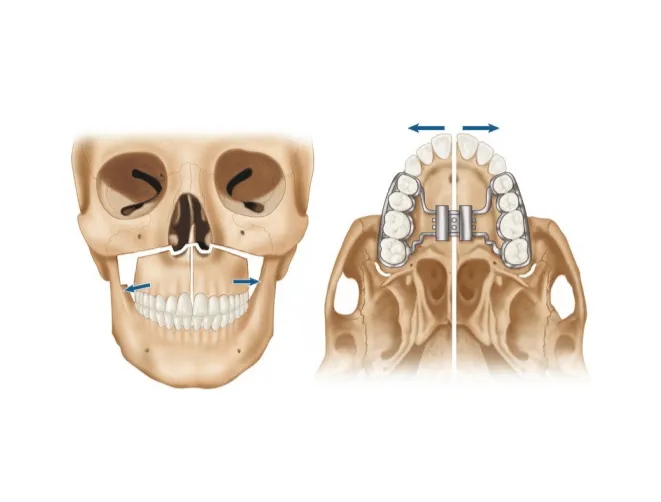
Distraction osteogenesis is a specialized surgical technique used to gradually lengthen or reconstruct bones of the jaw and facial skeleton. Rather than moving a bone into its final position during a single procedure, the technique allows new bone to develop progressively between two carefully separated bone segments.
An oral and maxillofacial surgeon creates a controlled separation in the bone and places a distraction device. Over time, the device gradually moves the bone segments apart. The body responds by forming new bone in the space between them.
This gradual process enables Dr. Berger to address certain complex skeletal conditions while allowing surrounding soft tissues to adapt as the bone is lengthened.
Who May Be a Candidate for Distraction Osteogenesis?
Distraction osteogenesis may be considered when additional bone length or skeletal development is necessary to improve facial structure or function. Because every facial deformity is different, a comprehensive examination and advanced imaging are necessary to determine whether this technique is appropriate.
Depending on the individual case, distraction osteogenesis may be considered for:
- Congenital jaw and facial abnormalities
- An underdeveloped upper or lower jaw
- Significant facial asymmetry
- Complex craniofacial skeletal deformities
- Certain conditions affecting breathing or oral function
- Reconstruction following trauma or other skeletal damage
Dr. Berger evaluates your facial anatomy, jaw relationship, oral function, and treatment goals before recommending a surgical plan.
How Does Distraction Osteogenesis Work?
Treatment occurs gradually and generally involves several stages.
First, Dr. Berger carefully plans the direction and extent of the required bone movement. During surgery, the targeted bone is divided, and a distraction device is positioned to control movement.
After an initial healing period, the distraction phase begins. The device is adjusted incrementally according to a specific schedule, slowly separating the bone segments and encouraging new bone to form within the developing space.
Once the desired correction has been achieved, the device remains in place during a consolidation period. This gives the newly formed bone time to strengthen and mature before the device is removed when appropriate.
Throughout treatment, regular follow-up appointments allow Dr. Berger to evaluate bone formation, facial development, and overall progress.
What Are the Benefits of Distraction Osteogenesis?
The gradual nature of distraction osteogenesis makes it a valuable option for select complex craniofacial and jaw conditions. Potential benefits include:
- Gradual correction of significant skeletal discrepancies
- Formation of new natural bone
- Improvement in jaw and facial symmetry
- Better alignment of facial structures
- Improved chewing or speaking function in appropriate cases
- Potential improvement in breathing when jaw anatomy affects the airway
- Adaptation of surrounding muscles and soft tissues during treatment
The specific goals and potential benefits depend on the condition being treated.
Recovery and Follow-Up Care
Recovery from distraction osteogenesis differs from traditional jaw surgery in that treatment continues as the bone is gradually lengthened. Some swelling and discomfort may occur after the initial procedure, and patients receive individualized instructions regarding oral hygiene, diet, activity, and care of the distraction device.
Follow-up is an especially important part of treatment. Dr. Berger monitors the position of the bones and development of new bone throughout the distraction and consolidation phases.
The total treatment timeline varies depending on the extent of correction required and the bone’s response. Patients and families receive clear instructions throughout each stage so they understand what to expect and how to care for the surgical area.
Why Choose The San Diego Center for Surgery?
- Proven Expertise: Dr. Berger is a leader in the field of maxillofacial surgery, known for his innovative use of Distraction Osteogenesis.
- Comprehensive Care: Our team offers a full spectrum of surgical treatments, ensuring comprehensive care tailored to your specific needs.
- Patient-Centric Approach: We emphasize a compassionate approach, combining modern precision with warm, human care.
- State-of-the-Art Facilities: Experience the highest standards of safety and comfort in our cutting-edge surgical center.
Schedule Your Consultation Today
If you or a loved one are considering Distraction Osteogenesis for oral and facial skeletal deformities, we invite you to take the first step towards a transformative experience. Contact The San Diego Center for Surgery today to call our office and schedule a consultation with Dr. Joel S. Berger. Our team is here to answer your questions and guide you on your journey to improved health and well-being.