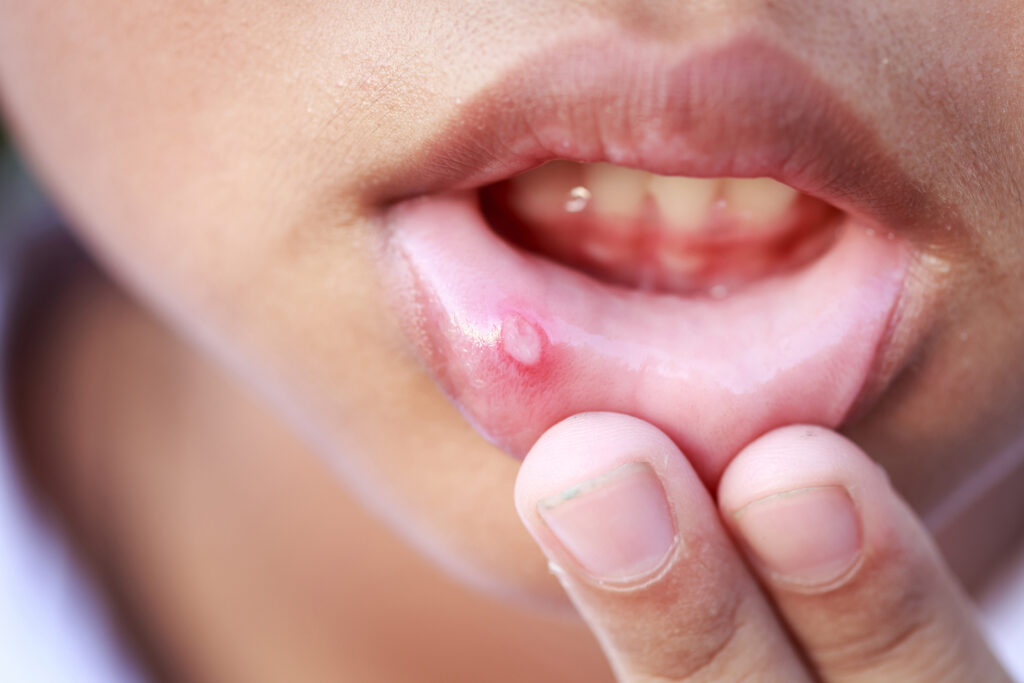
Most mouth sores are temporary annoyances. You might develop one after accidentally biting your cheek, eating something irritating, or experiencing a common canker sore. But when a sore sticks around instead of healing, it deserves attention. Persistent changes in your mouth tissues can have many causes, and occasionally they can signal oral cancer.
At the San Diego Center for Oral & Maxillofacial Surgery, Dr. Joel Berger, D.D.S., M.D., evaluates abnormal oral tissues and other oral pathology concerns. As a board-certified Oral and Maxillofacial Surgeon with extensive medical, dental, and surgical training, Dr. Berger can determine when a suspicious area requires further evaluation or biopsy.
How Long Is Too Long for a Mouth Sore?
Many minor mouth sores heal within approximately two weeks. If a sore persists beyond that point, repeatedly returns in the same location, or seems to be getting worse rather than better, schedule an evaluation.
Persistence doesn’t automatically mean cancer. Infections, ongoing irritation, trauma, and other oral conditions can also cause lesions that are slow to heal. The important step is determining why the area isn’t resolving.
What Other Changes Should You Watch For?
A non-healing sore isn’t the only oral change worth checking. Pay attention to abnormalities such as:
- Red or white patches inside your mouth
- A lump, thickened area, or unusual growth
- Unexplained bleeding
- Persistent pain or tenderness
- Numbness of the tongue, lip, or other areas
- Difficulty chewing or swallowing
- A noticeable change in how your teeth fit together
These symptoms can occur for reasons unrelated to cancer, but persistent or unexplained changes warrant professional evaluation.
Will You Need an Oral Biopsy?
Not necessarily. Your evaluation begins with an examination of the suspicious tissue and a review of your symptoms and health history. If a lesion’s appearance or persistence raises concern, your doctor may recommend an oral biopsy.
During a biopsy, the doctor collects a small sample of abnormal tissue and examines it to determine the cell type. This provides information that visual examination alone cannot.
Don’t Ignore a Persistent Change
You don’t need to assume the worst when a mouth sore won’t disappear, but you shouldn’t ignore it either. Early evaluation can identify benign conditions and, when something more serious is present, help you move toward appropriate care sooner.
If you have a persistent mouth sore or another concerning oral tissue change, contact the San Diego Center for Oral & Maxillofacial Surgery at (858) 292-5175. Dr. Berger’s board-certified surgical expertise and comprehensive understanding of oral and facial pathology provide the experience needed for careful diagnosis and personalized care.